Construction Finance Software: A Diagnostic Checklist for Main Contractors
Construction finance software is now more of a buying phrase than a defined software category. Vendors use it because it ranks. Buyers use it because they
Bauwise software capabilities
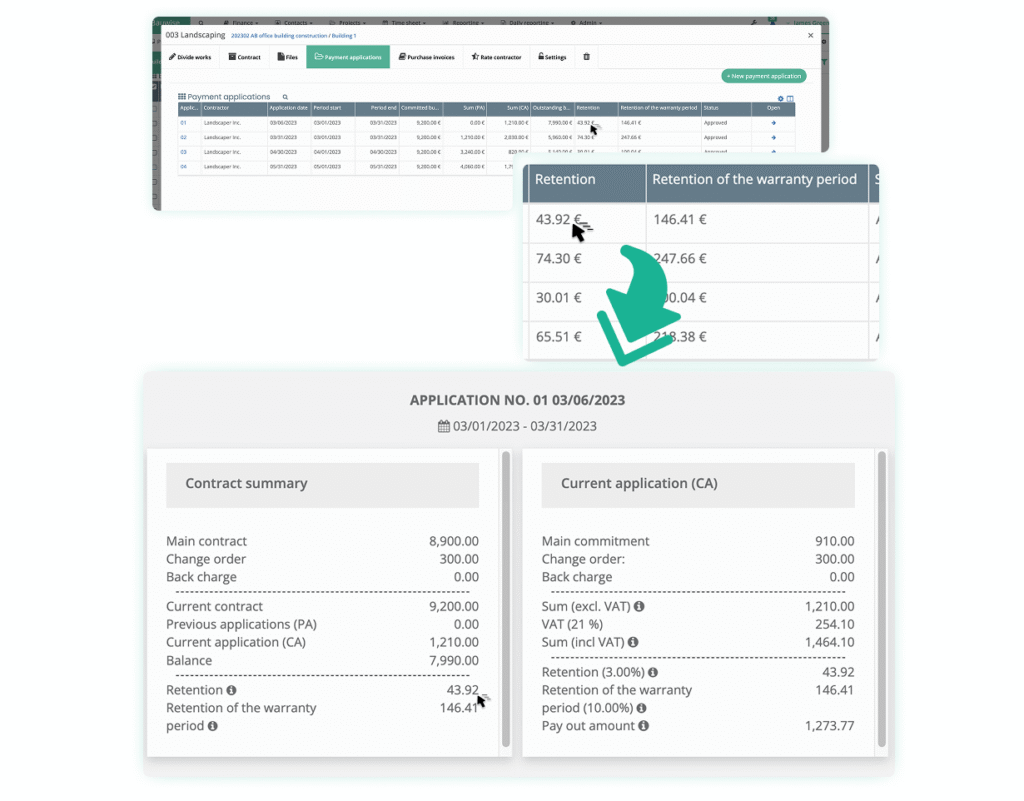
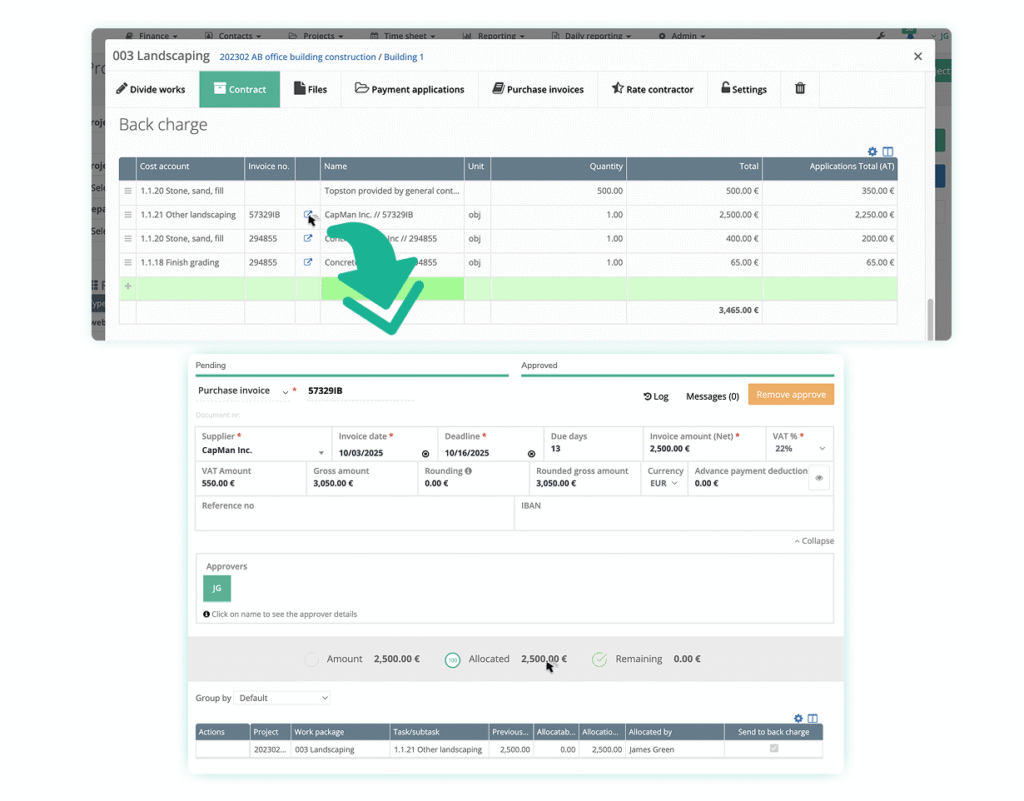
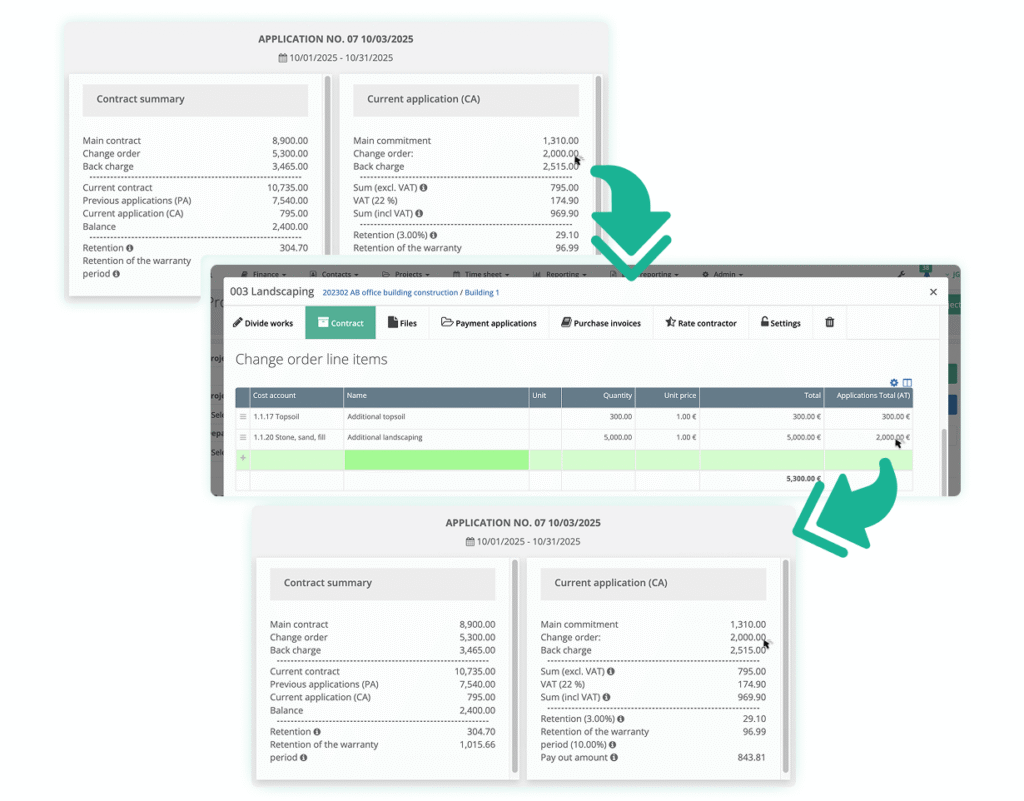
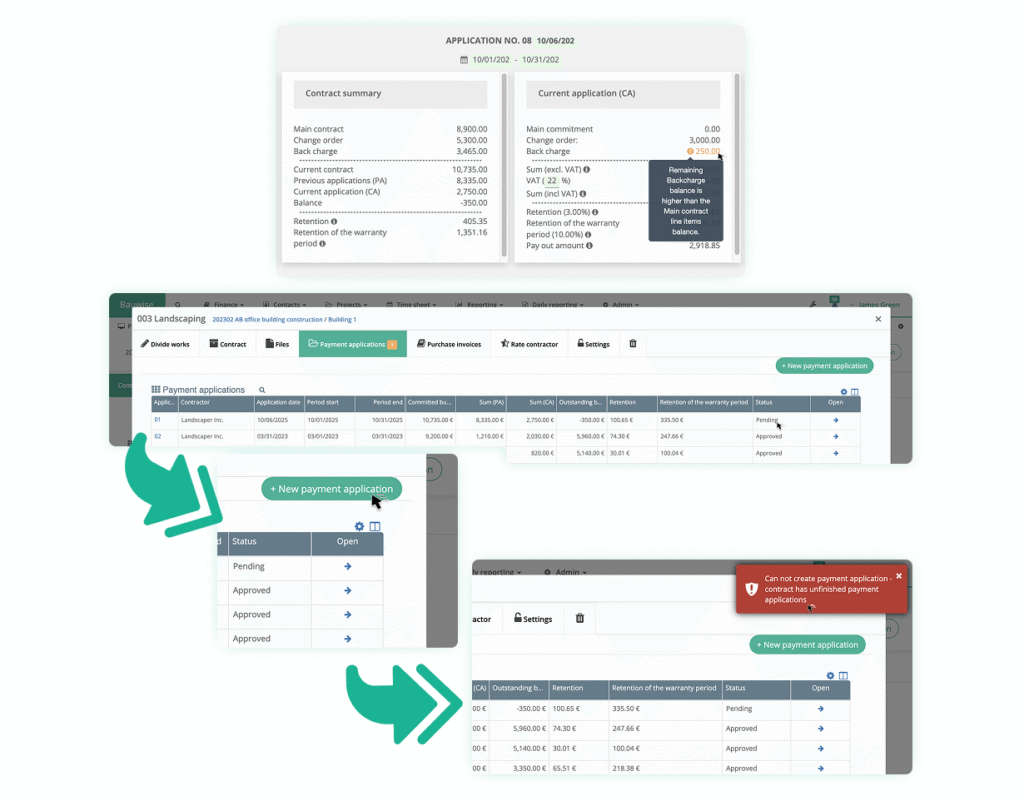
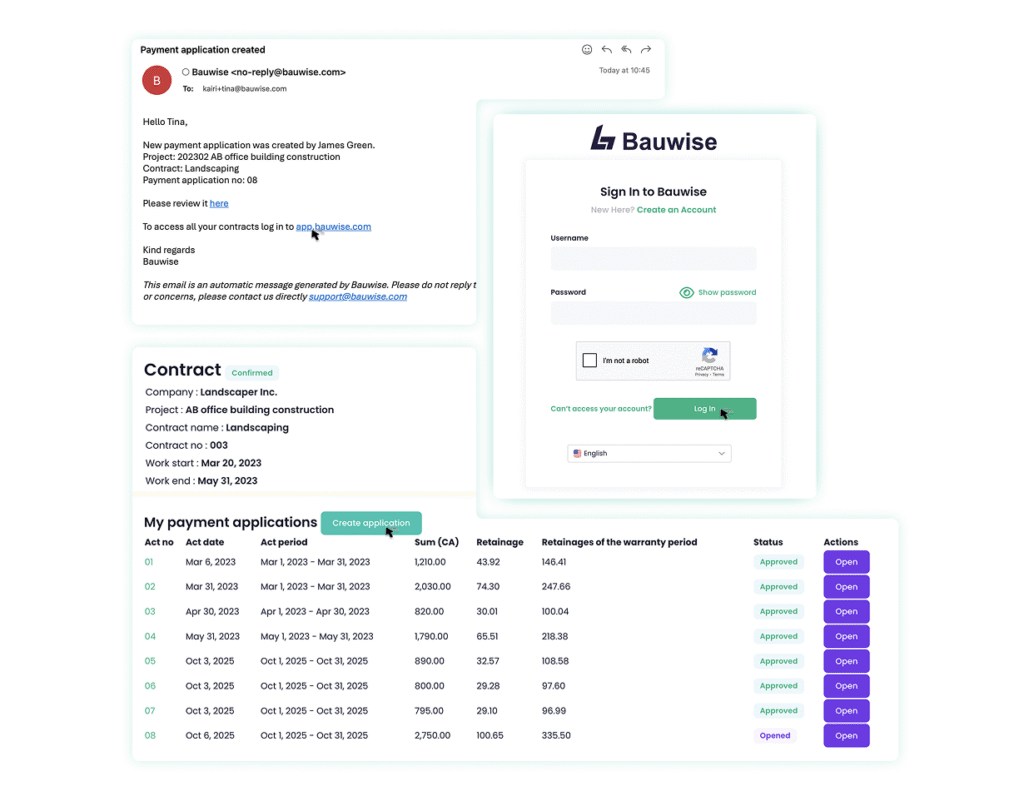
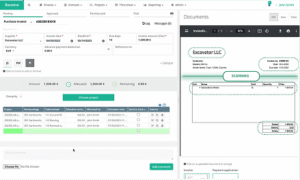
Accelerate month-end reporting between Contractors and Subcontractors by streamlining the Applications for Payment process into a structured, auditable workflows. Initiate change orders and track progress, apply retentions and back charges with full compliance. A dedicated Subcontractor portal, automated notifications, and digital validation keep all parties aligned, while approved Applications for Payment instantly update budgets, commitments, and Estimate At Completion (EAC).
Bauwise helps construction teams optimize Applications for Payment — to improve cost control, streamline workflows, and deliver on budget.
Construction project profitability
Construction Projects
Of Construction Budgets
Ensure retentions are calculated, tracked, and released in line with contractual requirements. Configure retention structures and give subcontractors a clear, consistent view of withheld amounts.
Simplify contract administration with a streamlined back charge process. Project Managers and Commercial Teams can add back charges directly against subcontractor applications, ensuring they are fully documented, traceable, and integrated with contract commitments and invoicing.
Capture, approve, and integrate change orders into Applications for Payment. Allow subcontractors to add change orders line items, ensuring all costs are tracked, approved, and reflected in commitments and budgets. Keep construction project costs accurate and disputes to a minimum.
Remove the risks of budget overruns, missed change orders, and non-compliant claims. Ensure every Application for Payment is accurate, traceable, and aligned with contract terms — protecting both the project and the contractor. Guarantee that retentions, back charges, and change orders are applied correctly. Built-in lump-sum safeguards prevent Subcontractors from overspend the agreed contract amounts, skipping change orders, or submitting incomplete Application for Payment forms.
Bauwise’s dedicated Subcontractor Portal allows Suppliers and Subcontractors to securely access and manage all their commitments from a single interface. Suppliers and Subcontractors can fill in the construction project progress, add additional works, submit Applications for Payment and send them for the main contractor’s approval.
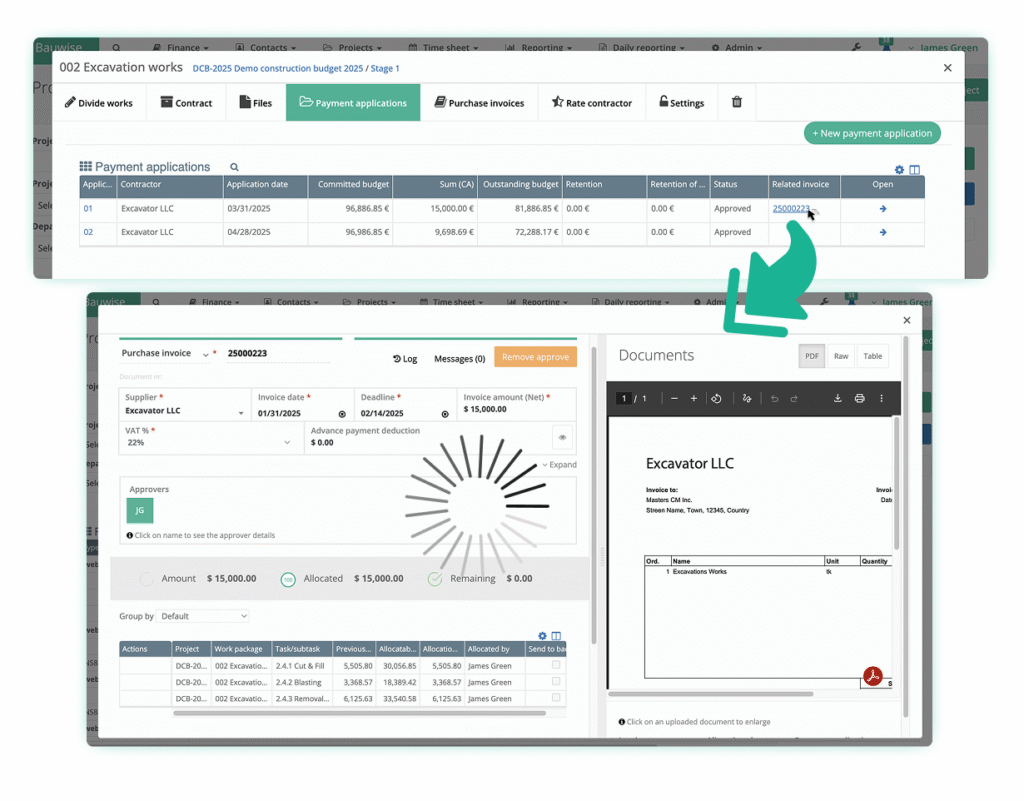
Approved Applications for Payment update commitments, change orders, and Estimate at Completion (EAC) in real time — keeping financial reporting, invoicing, and budget management in sync.
Managing €10B+ in Construction Budgets with Bauwise


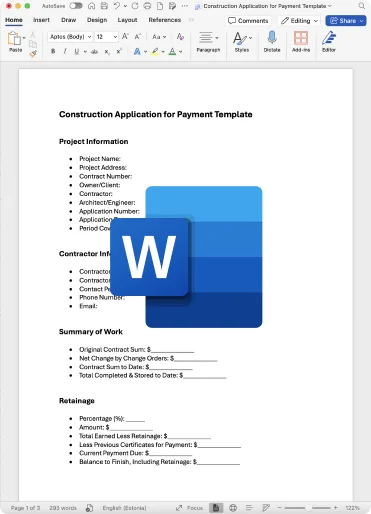
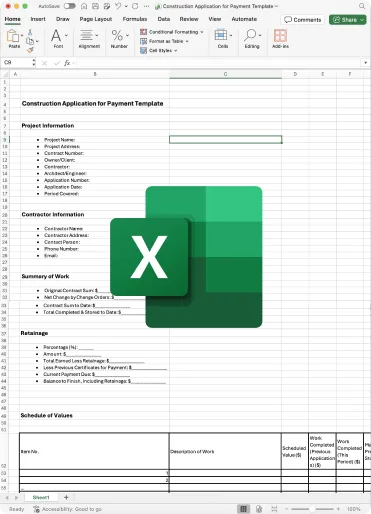
Use our free construction payment application templates — available in Excel and Word formats.
Allocate budget based on construction stages or buildings. Track Forecast to Complete (FTC) and Estimate at Completion (EAC). Control budgets through versions and approval locks. Forecast profitability, manage accruals, and sync financial data with integrated accounting or ERP software.
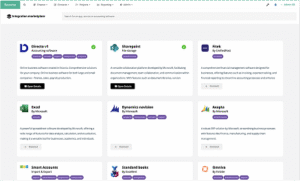
Automate data flow between your ERP or accounting software and Bauwise. When integrated, construction-related invoices flow directly into Bauwise for approval and return to the ERP or accounting software enriched with data — cost allocations, budget lines, and approver info — no double work required.
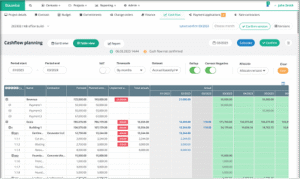
Get a structured, automated framework to plan, forecast, and monitor construction cash flow across all project stages. Generate cash flow forecasting baselines with one click, fill past periods with actual cost and revenue data, and align projections with the project’s Cost-at-Completion (CAC). Refine future forecasts, adjust monthly distributions, and manage approvals through version-controlled tracking.
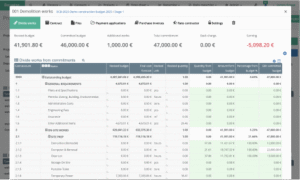
Automate commitments — create purchase orders (PO) and subcontractor contracts directly from budget lines. Manage scope changes, variations, and back charges from Applications for Payment (AfP) in real time. Track actuals, advances, and accruals at every stage. Allocate contingency reserves, forecast accurately, and centralize all vendor data for better procurement decisions.
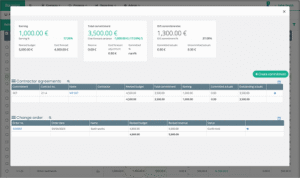
Track, review, and approve construction project scope changes. Submit change order requests with attachments, automatically calculate their impact on project cost, and adjust budgets upon approval. Maintain versioned audit trails and status tracking to ensure compliance, transparency, and project continuity.
Automate purchase invoice processing with AI-powered data extraction, pre-defined approval workflows and unique invoice allocations. Link invoices directly to purchase orders (PO), contracts or Applications for Payments (AfPs). Manage consolidated invoices for multiple projects between different teams. Meet governance standards, and comply with internal financial policies.
Create tender packages directly from budget lines, identify qualified bidders through the Bauwise database, and issue invitations to tender (ITT). Provide secure, login-free access for bidders to submit RFQs and compile all bids into an automatically generated comparison table. Ensure full traceability by linking every bid and award back to the budget lines and cost codes.
Review and approve construction invoices directly from your mobile device. Capture receipts and invoices — the Bauwise Mobile App uses AI-powered image recognition to extract data from images. Allocate receipts and invoices using Bauwise Purchase Invoice Management module.
try now
The typical learning time is just two sessions, while our software can save you up to 4 workdays per month
Bauwise equips construction CEOs with an automated cost management tool to maintain financial control, efficiency, and profitability across expanding portfolios. The cost management software links budgets, forecasts, contracts, and purchase orders in one system, enforcing approval workflows that preserve budget integrity and accuracy. Chief Executive Officers gain real-time visibility into consolidated portfolio performance, safeguarding project continuity, automating reporting, and simplifying construction portfolio management.
Bauwise provides an automated cost management solution for construction CFOs to obtain timely, verified financial data for cash flow and refinancing decisions. The software consolidates construction budgets, contracts, purchase orders, change orders, invoices, and Applications for Payment into a unified data source, ensuring all figures are validated, traceable, and audit-ready before reaching financial statements. Chief Financial Officers can track contingency budgets and risk reserves, gain visibility into liquidity, flag budget overruns early, and forecast portfolio-level cash flow.
Bauwise helps Construction Managers and Division Managers ensure all construction project costs are reported and accounted for, using an automated construction cost management tool. The software tracks linked budgets, contracts, purchase orders, and change orders, so every commitment is recorded, allocated, and tied to the correct project and cost code. Construction and Division Managers can leverage automated purchase invoice and Application for Payment validation rules with audit trails, compare planned versus actual costs in real time, and monitor division-level performance across projects.
Bauwise supports Construction Quantity Surveyors with an automated cost management solution to plan and manage full cycle construction costs — from forecasting and tendering to variation valuations and reporting. The software reconciles interim valuations, change orders, and actual costs in real time, updating forecasts and Estimate at Completion (EAC) automatically once costs are approved. It generates RFQs and tender packages, standardizes bids formats, and applies approval workflows. Links approved variations to their related contracts and cost codes, calculating their budget, commitments and EAC impact.
We’ve got your questions covered. If you can’t find the answer you’re looking for below, feel free to contact us.
Yes. In construction, the terms ‘Applications for Payment’ and ‘Payment Applications,’ also referred to as ‘Pay Apps,’ are often used interchangeably and all describe the same process — progress claims submitted by contractors or subcontractors to request payment for work completed during a specific period. The terminology varies depending on regional standards, contract type, or company preference, but the underlying meaning and purpose remain the same.
In short, invoices record straightforward transactions, while ‘Applications for Payment’ track ongoing project progress and ensure payments align with contract performance.
A ‘purchase invoice’ and an ‘Application for Payment’ both request payment, but they serve different purposes. Invoices are widely used across industries to bill for products or services, typically listing items, quantities, rates, and the total due. By contrast, ‘Applications for Payment’ — also called ‘progress claims’ or ‘Pay Apps’ — are specific to construction. They capture the contract value, approved changes, work completed to date, stored materials, current payment due, and any retainage withheld. Unlike invoices, which may be one-time or recurring, Applications for Payment are usually submitted at set intervals (e.g., monthly) and require supporting documentation such as timesheets or delivery notes. They also undergo a more rigorous approval process involving project managers, owners, and sometimes lenders.
‘Change order’ is the term most commonly used in North America, while ‘variation’ is more widely used in the UK, Australia, and other regions. Change orders and variations describe the same concept — modifications to the original scope of work, contract value, or schedule. Both require formal approval and documentation to ensure that adjustments to cost, time, or deliverables are properly recorded and managed within the project contract.
Retentions and back charges directly influence the value of an Application for Payment. Retentions (or retainage) are a portion of the contract sum withheld from each payment to ensure project completion and quality; they reduce the amount approved for immediate payment but are released once contractual milestones or final completion are achieved. Back charges are deductions applied when the contractor incurs costs due to subcontractor errors, delays, or incomplete work. Both adjustments are recorded within the Application for Payment to ensure that the requested amount accurately reflects the project’s financial status.


Construction finance software is now more of a buying phrase than a defined software category. Vendors use it because it ranks. Buyers use it because they

On a typical UK main contractor project, where the majority of direct project cost is subcontracted — most of the commercial risk is carried by

The Construction Industry Scheme (CIS) is not new to UK construction. Most commercial teams work within it every month. What the scheme demands in practice
Fill in your details, and we’ll send the template straight to your inbox.
Dont see Calendly for booking? Click Here to open Calendly
We use cookies on our website to give you the most relevant experience by remembering your preferences and repeat visits. By clicking “Accept All”, you consent to the use of ALL the cookies.