
Table of Contents
Anyone starting in the construction industry and familiarizing themselves with construction management processes and terms must understand the difference between a change order and cost overrun. While both involve deviations from the original budget, they stem from different causes and have distinct implications.
So, what is the difference between a construction change order and a cost overrun? Change orders are planned changes to the project scope, agreed upon and documented, while cost overruns are unplanned budgetary excesses, often reflecting project management challenges. Proper understanding and management of these elements are crucial for the smooth execution and financial health of construction projects.
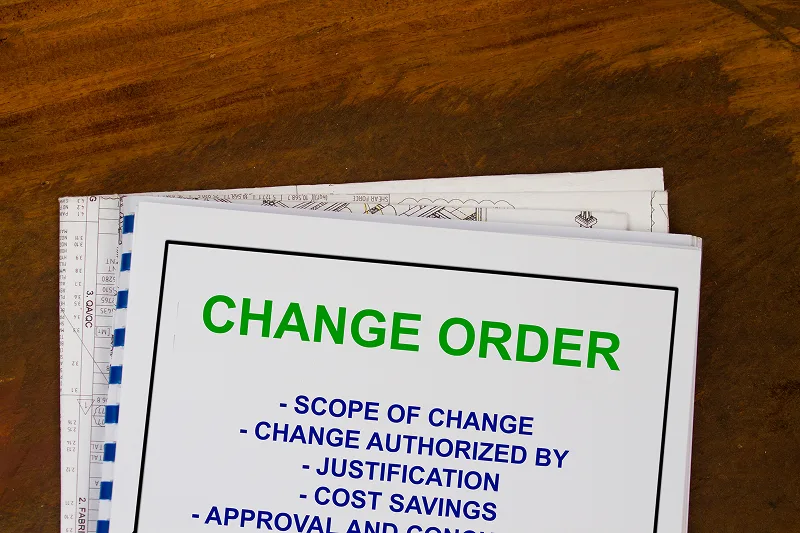
What is a Change Order in Construction and What Are It’s Key Aspects?
A change order is an official request for additional work that was not included in the original project scope, leading to a revised budget and timeline. For instance, consider a construction project for a new office building. After construction begins, the client decides to add a high-end glass façade instead of the initially planned brick exterior.
This request constitutes a change order. It requires formal documentation and agreement between the client and the contractor, leading to an increase in the project’s cost and an extension of its timeline.
Key aspects of a construction change order:
- Initiated by stakeholders (client, contractor, or architect)
- Requires mutual agreement and documentation
- Reflects an agreed-upon alteration in the project’s scope, budget, and timeline

What is a Cost Overrun in Construction and What Are It’s Main Characteristics?
Cost overruns occur when a project exceeds its original budget without any formal change in its scope. For example, during the construction of a residential complex, the contractor might have underestimated the cost of raw materials. As a result, the actual spending on materials exceeds the budgeted amount, leading to a cost overrun.
This overrun was not planned, nor did it involve a scope change agreed upon by the client and contractor. It reflects a discrepancy between the estimated and actual costs due to inaccurate forecasting or unforeseen market changes.
Characteristics of cost overruns:
- Unanticipated excess in spending.
- Indicates a lack of control or foresight.
- No formal agreement or documentation process like change orders.
- Can lead to financial instability and disputes.
How to Streamline your Construction Change Orders
Bauwise offers a user-friendly construction cost management software that simplifies the tracking, processing, and approval of change orders. With its intuitive interface, you can easily create, modify, and manage change orders, ensuring that all modifications are accurately documented and efficiently processed.
The software provides real-time updates and alerts, keeping all stakeholders informed and aligned, thus reducing delays and misunderstandings.
About the Author

Taavi Kaiv
Taavi Kaiv is a construction specialist with over ten years of experience in the construction industry. Taavi is an accomplished construction project manager with many successful projects that have been completed under his guidance. Taavi holds a master’s degree in construction management from the Tallinn University of Technology. View profile
Related content
Read our other articles where you can find helpful and relevant information: